Soups
Rassolnik pickle soup with pearl barley
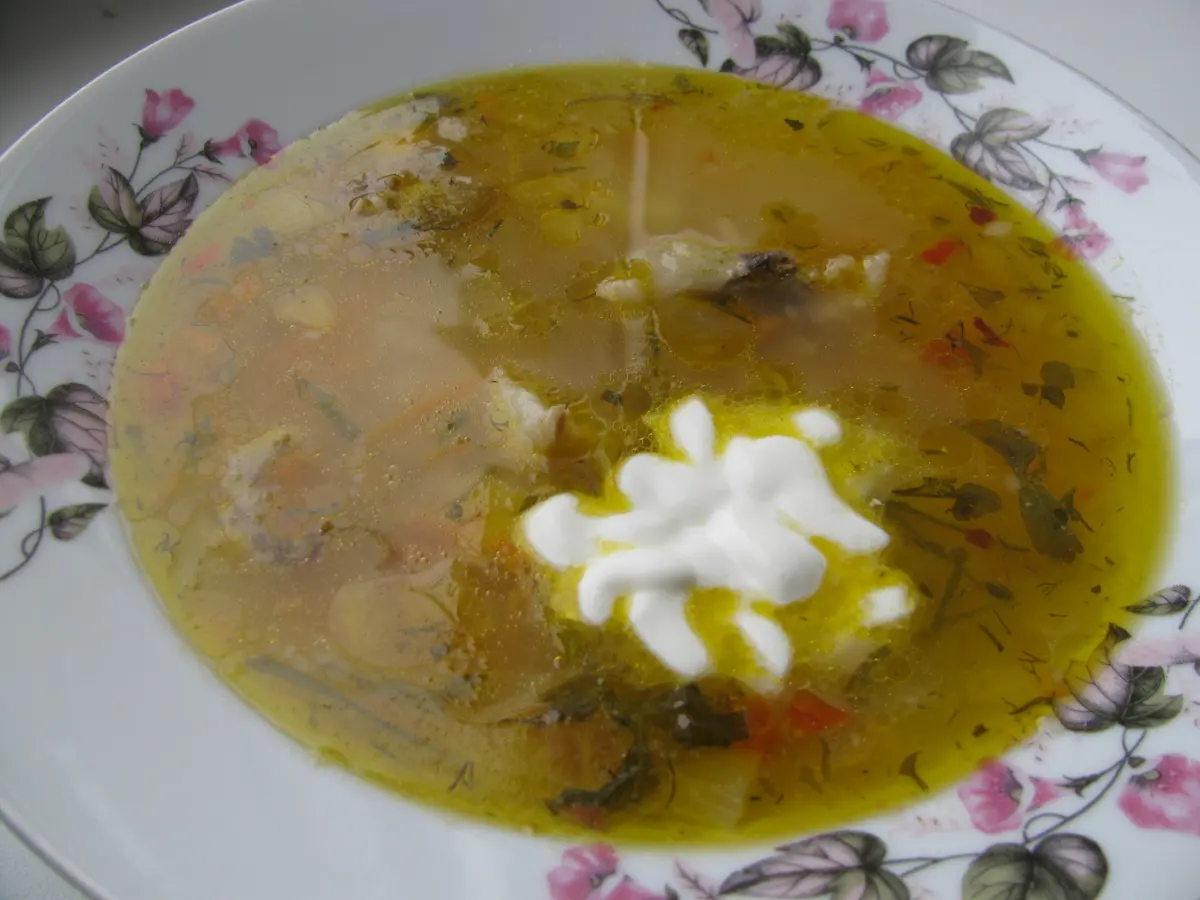
Rassolnik is an everyday Russian soup built on salty dill pickles and their brine, which give the broth a gentle sourness. Pearl barley makes it thick and filling, though it is best cooked separately so the broth stays clear. We use chicken because it is quicker, but beef on the bone makes a more traditional version if you have an extra half hour. The single rule that matters is timing: the pickles and brine go in only once the potatoes are tender, otherwise the acid stops them softening. It is cheap, warming and even better the next day.
Method
Tap a step to mark it done.
Rinse the barley until the water runs clear, cover with cold water and soak for at least 2 hours. Drain, cover with fresh water, bring to the boil and simmer for 35-40 minutes until tender. Drain in a sieve.
Put the chicken in a pan with 2.5 litres of cold water, bring to the boil and skim. Simmer gently for 40 minutes, then lift out the chicken, take the meat off the bones and cut it into small pieces.
Cut the potatoes into 1.5 cm cubes, add to the simmering broth and cook for 10 minutes.
Meanwhile grate the carrot coarsely and finely chop the onion. Fry them in the oil for 5-6 minutes until soft, add the tomato purée and cook for 1 more minute.
Coarsely grate the pickles or cut them into thin strips, peeling them first if the skin is tough. Braise them in a small pan with 2-3 tablespoons of broth for 5 minutes.
When the potatoes are almost tender, add the cooked barley, the fried vegetables, the pickles and the chicken. Simmer for 10 minutes.
Pour in 150 ml of brine, taste and add more if you like. Add the bay leaf and pepper, and salt only if needed. Simmer for 3 minutes.
Turn off the heat, stir in the chopped dill and leave the soup covered for 15-20 minutes before serving.
Tips for success
- Never add the pickles or brine before the potatoes are cooked; in acidic broth they stay hard.
- Cooking the barley separately keeps the broth clear and stops the grain soaking up all the liquid.
- Salt only at the very end, after the pickles and brine are in.
- Rassolnik tastes better the next day, once the pickles have flavoured the broth.
Serving and storage
Serve hot with a spoonful of sour cream, fresh dill and rye bread.
Keeps in the fridge for up to 3 days. The barley swells, so you may need a splash of water when reheating. Freezing is not recommended, as the potatoes turn mealy.
Variations
- Leningrad style: use 80 g of rice instead of barley and add it with the potatoes.
- With beef: simmer 600 g of beef on the bone for 1.5 hours for the broth.
- Old-fashioned version with kidneys, which are soaked and boiled separately before going into the soup.
Calories and macros
Per serving (about 680 g):
Per 100 g: 59 kcal, P 3.3, F 3.1, C 4.5. An estimate based on average ingredient values. Your daily calories ›