Main dishes
Uzbek beef plov
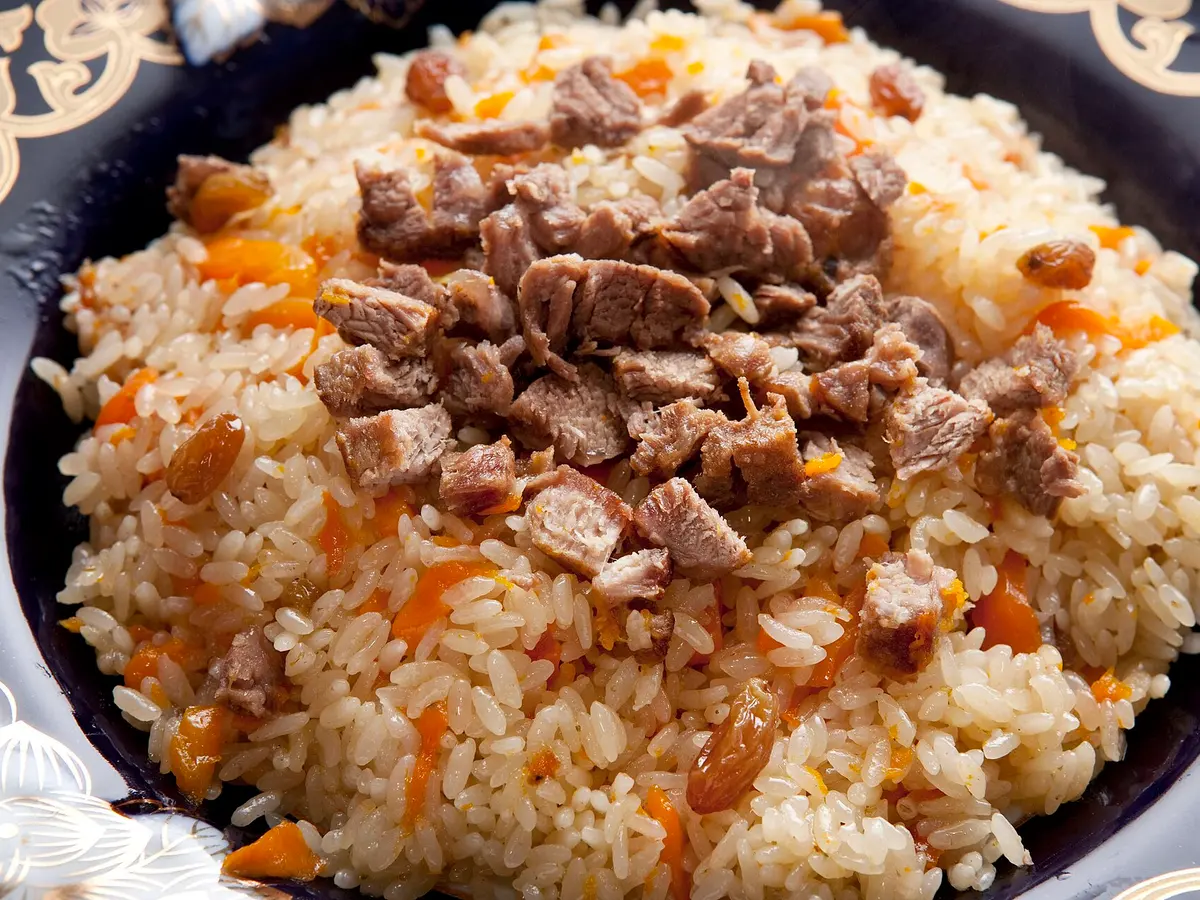
Plov is the rice dish that anchors family meals across Central Asia, and you don't need a traditional kazan to make it well. A heavy casserole, good braising beef, carrots cut into matchsticks and a little patience will do. The key is the zirvak: meat, onion and carrot simmered in a cumin-scented broth that the rice later steams in. Get the water level right and leave the rice alone once it goes in, and you'll get separate, glossy grains with soft, sweet garlic tucked inside. This batch feeds a crowd and tastes even better the next day.
Method
Tap a step to mark it done.
Rinse the rice in 5-7 changes of water until it runs almost clear. Cover with warm salted water and leave to soak for 30 minutes while you make the base.
Cut the beef into 3-4 cm chunks, slice the onion into half-rings and cut the carrots into long matchsticks.
Heat the oil in a heavy 4-5 litre pot until very hot. Add the beef and sear over high heat for 8-10 minutes until well browned on all sides.
Add the onion and fry for 5-7 minutes until golden. Add the carrots, let them sit for a minute without stirring, then stir and cook for another 5-7 minutes until slightly softened.
Crush 1-2 teaspoons of cumin between your palms and add it. Season with salt and pepper and pour in 500 ml of hot water. Bring to the boil, lower the heat, cover and simmer for 40 minutes until the beef is tender.
Taste the broth: it should be slightly over-salted, as the rice will absorb it. Drain the rice and spread it evenly over the meat. Do not stir.
Gently pour in about 500 ml of hot water over a slotted spoon so it covers the rice by 1.5 cm. Cook uncovered over high heat for 8-10 minutes until the water has been absorbed and none is visible on the surface.
Push the garlic heads into the rice. Heap the rice into a dome and poke 5-6 holes down to the bottom with the handle of a spoon to let steam escape.
Cover tightly, turn the heat to the lowest setting and leave for 25 minutes. Turn off the heat, rest for 10 minutes, then stir and serve.
Tips for success
- Don't lift the lid or stir during the final steaming, or the grains will break and turn sticky.
- If the water has gone but the rice is still firm, sprinkle over 3-4 tablespoons of hot water, cover and leave for 10 more minutes.
- Too little oil makes plov dry. 100 g for 500 g of rice is already on the lighter side.
- If your pot is narrow, brown the meat in batches so it sears rather than stews.
Serving and storage
Mound the plov on a large platter with the meat and carrots on top and the soft garlic alongside. A salad of thinly sliced tomato and onion and a pot of green tea are the classic companions.
Keep covered in the fridge for up to 3 days. Reheat in a covered frying pan with a splash of water, or in the microwave.
Variations
- Lamb plov: use lamb shoulder instead of beef and simmer the base for 30 minutes.
- With chickpeas: add 150 g of dried chickpeas, soaked overnight, to the base with the water.
- With barberries and raisins: scatter a tablespoon of each over the base before adding the rice.
Calories and macros
Per serving (about 472 g):
Per 100 g: 146 kcal, P 5.6, F 6.3, C 17.2. An estimate based on average ingredient values. Your daily calories ›