Salads
Greek salad
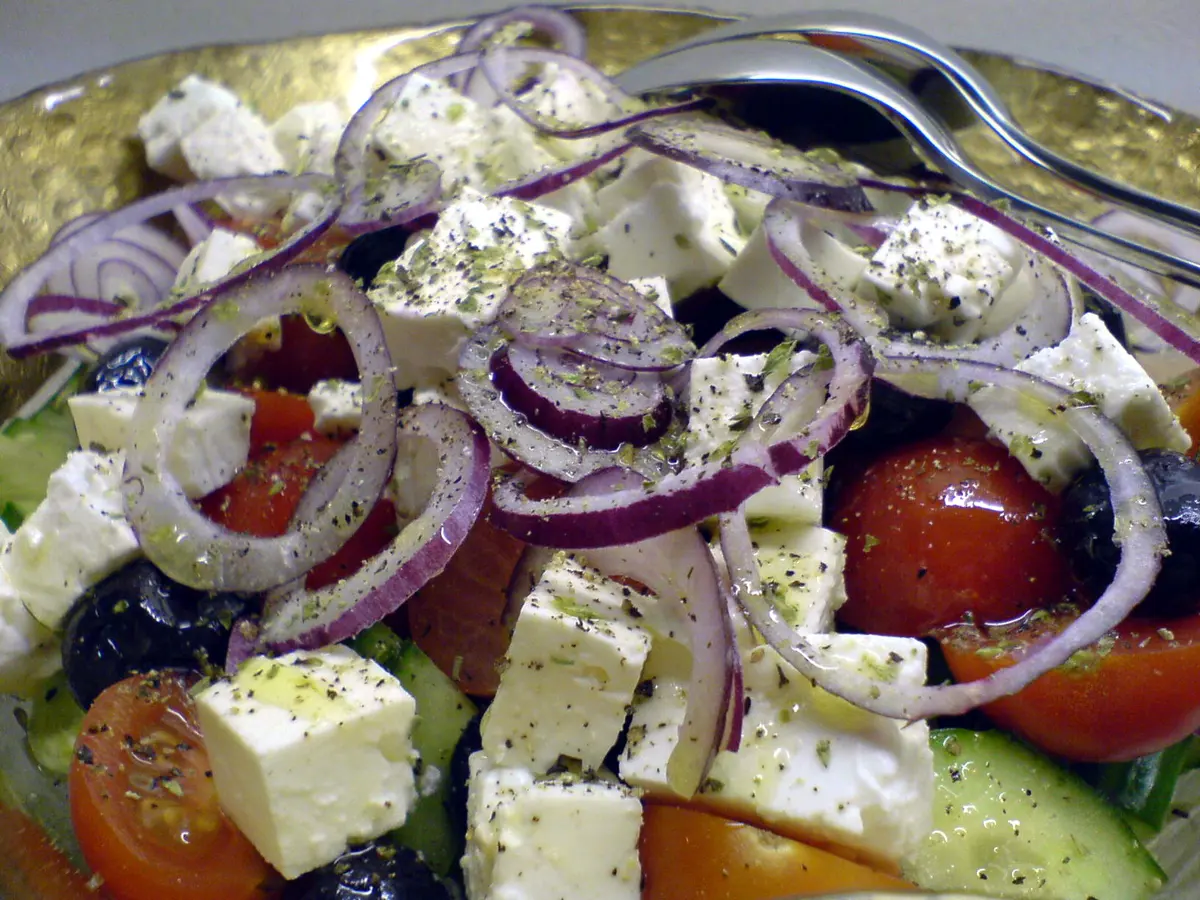
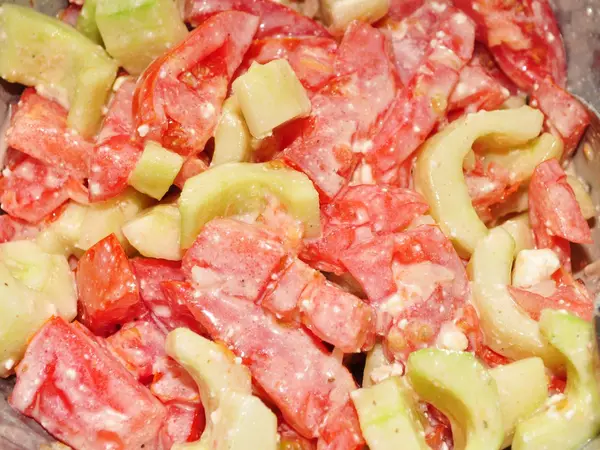
Greek village salad, or horiatiki, takes fifteen minutes and tastes like summer. Everything depends on the ingredients: ripe fragrant tomatoes, crisp cucumbers, sweet pepper, red onion, olives and a good block of feta. In Greece the vegetables are cut chunky and the cheese sits on top in one slab, though cubes are easier at home. The dressing is as simple as it gets: olive oil, a little lemon juice and dried oregano. No mayonnaise, just fresh, light flavour.
Method
Tap a step to mark it done.
Cut the tomatoes into large wedges or 2 to 3 cm chunks.
Halve the cucumbers lengthways and slice into 1 cm half-moons. If the skin is tough, peel it in stripes.
Deseed the pepper and cut it into wide strips. Slice the red onion into thin half-rings.
Put the vegetables in a wide bowl or on a platter and add the olives.
Whisk the olive oil with about 1 tablespoon of lemon juice and a pinch of salt and pepper. Pour over the salad and toss gently.
Top with the feta, in cubes or one piece, drizzle with a little more oil and sprinkle with oregano. Serve straight away.
Tips for success
- Keep the pieces large: a Greek salad should be chunky and juicy.
- Salt lightly, if at all. Feta and olives bring plenty of salt.
- Do not toss after adding the feta or it crumbles and clouds the dressing.
- Do not chill it for more than an hour before serving; cold dulls tomato flavour.
Serving and storage
Serve right away with crusty bread to mop up the juices. It goes well with grilled meat, fish or kebabs.
Best eaten fresh. Leftovers keep in the fridge for up to 12 hours but turn watery and soft.
Variations
- Add a handful of romaine or iceberg for a bulkier salad.
- Add 1 tablespoon of capers for extra bite.
- Use red wine vinegar instead of lemon, as many Greek cooks do.
Calories and macros
Per serving (about 316 g):
Per 100 g: 92 kcal, P 2.9, F 7.3, C 4.5. An estimate based on average ingredient values. Your daily calories ›